

 11 min read
 Updated on October 6, 2026

Most lists of puzzle games for beginners are really lists of famous puzzle games. Those two things are not the same. A game can be a masterpiece and still leave a new player staring at one screen for forty minutes. Worse, that player starts to wonder whether the game is broken or they are.
So I want to ask a different question. What does a first puzzle game need to do for someone who has never finished one? My answer is simple: it has to teach you how to be stuck. Being stuck is the real skill in this genre. The art, the music and the story are lovely extras. However, the player who learns to sit comfortably in not-knowing is the one still playing a year later.
This guide ranks six puzzle games for beginners by how kindly they handle that feeling. You can start any of them tonight without reading a walkthrough. After the list, you will find a few habits that make every game easier, plus an FAQ that answers the questions beginners ask most.
The three kinds of stuck in puzzle games for beginners

Every puzzle game makes you stuck sooner or later. Still, stuck does not always feel the same. After years of handing controllers to friends and family, I have noticed three flavors.
Rule stuck
You do not understand what the game wants from you. Buttons do things you cannot predict. You cannot tell whether you are failing or simply have not found the right door yet. This flavor is the worst one for beginners, because there is nothing to think about. You can only guess.
Idea stuck
You understand the rules perfectly, but the trick has not clicked yet. This is the good kind. When people call a puzzle satisfying, they mean the moment an idea-stuck puzzle comes loose. In that moment, the answer feels like yours.
Patience stuck
You already know the answer, but the game makes you carry it out the slow way. Maybe the movement drags, the repeats pile up, or the controls fight you. At that point it stops being a puzzle and turns into friction.
A great beginner game removes rule-stuck almost completely. It also keeps patience-stuck to a minimum. Then it serves idea-stuck in small, survivable portions. I used that lens for every pick below.
1. Unpacking: the gentlest first step
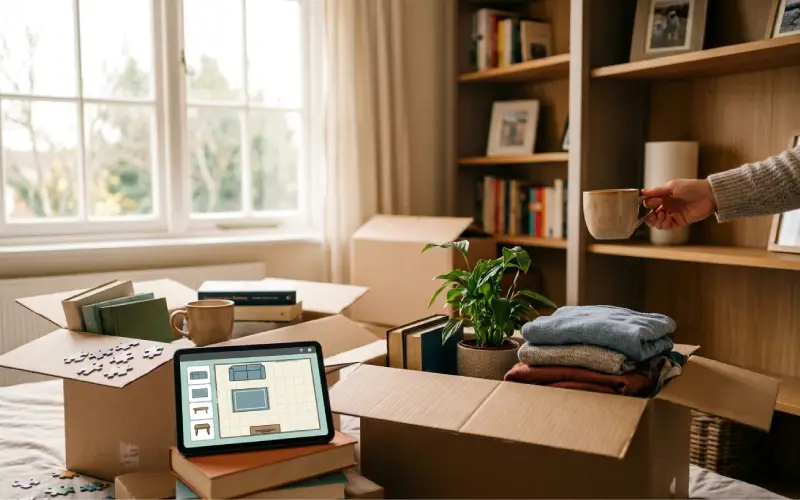
You pull objects out of moving boxes and decide where they go in a new room. That is the whole game. There is no timer and no way to lose. You also never have to memorize a pile of rules. Pick up the toothbrush, put it somewhere that feels right, and move on.
What makes it a puzzle is that the game quietly has opinions. When you finish a box, it flags any item sitting in a spot that makes no sense. So you learn the logic of each home by bumping into it. Over a few hours, the rooms tell the story of one person. You piece it together with your own hands, because nobody explains it to you.
Unpacking is one of the best puzzle games for beginners if you have always believed this genre is for “maths people.” It is nearly all idea-stuck of the friendliest kind, and the controls could not be simpler. The catch is small. A few placements feel arbitrary, so the game may correct you for a spot a real person would happily use. It also lasts only about four hours. For a first game, though, short is a feature.
2. Monument Valley: a puzzle you can finish on a train
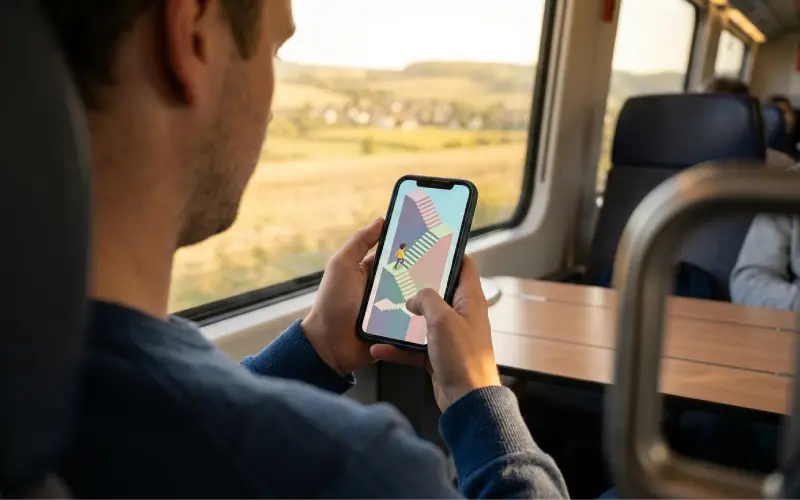
You guide a small silent princess through towers and staircases that could never exist in real life. You touch a lever, turn a wheel or slide a piece. Then paths connect in ways that break the usual rules of space.
One idea sits at the core, and it is also the best lesson in the game. If two paths look connected from where you stand, then they are connected. The game teaches that rule of perspective in the first few minutes. After that, it bends the rule in a dozen charming ways. Because the rule is so clear, you almost never feel rule-stuck. When you do feel idea-stuck, it usually lasts under a minute, since only so many things on screen can move.
The touch controls also make it the natural pick if you play on a phone. The cost of all that kindness is that experienced players will find it too easy. That is fine. You are not here to be challenged yet. Instead, you are here to build the habit of looking at a problem from another angle, and this game teaches that habit better than most. Expect about two hours, which makes it one of the easiest puzzle games for beginners to finish.
3. Portal: the best teacher in the genre
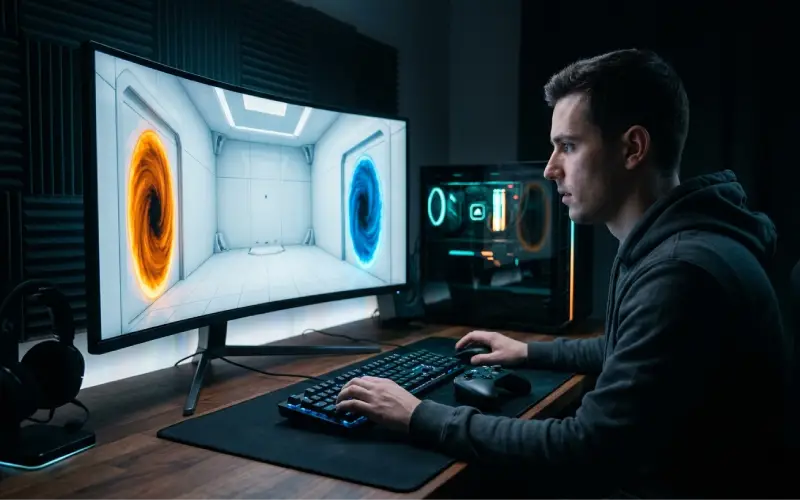
Portal hands you a gun that opens two linked doorways, one for entry and one for exit. Then it drops you into a sequence of test chambers. That is the entire mechanic. Walk through the orange doorway and you come out of the blue one, still carrying the speed you had when you went in.
What sets Portal apart is how it teaches. Each chamber introduces exactly one new idea and lets you play with it safely. Then the next chamber combines it with the earlier ones. By the time the puzzles get tricky, the game has trained you so gradually that you cannot remember learning anything.
However, you play Portal from a first-person view. If you have never used a mouse and keyboard, that camera can create patience-stuck. A small number of people also feel queasy in first-person games. So try ten minutes before you decide. If it clicks, you get three to four funny, unusual hours with a narrator you will probably end up quoting to friends.
4. A Little to the Left: tidying as a puzzle
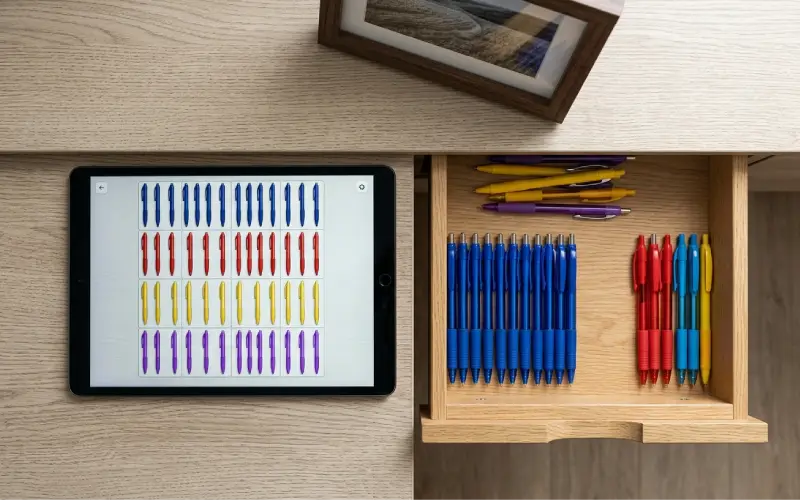
Here the puzzles are domestic. Think of a drawer of mismatched pens, a shelf of books that should follow some order, or a tilted picture frame. You rearrange things until they feel right, and the game confirms when you land on a valid answer. Several puzzles have more than one solution. That removes the anxious sense that a single answer exists and you keep failing to guess it.
This game suits beginners because it respects your instincts. If you have ever lined up your desk until it looked correct, you already own the skill. Gentle hints help when you stall. Meanwhile, a cat will happily ruin your carefully arranged work. That is both the joke and a small lesson about not taking it too seriously.
Because it relies on observation instead of logic chains, it makes a good bridge for people who find Portal or Monument Valley a little too mechanical. The weakness is simple. It is brief and light, and a few puzzles rely on a hunch you may only find by luck.
5. The Room: a tactile mystery box
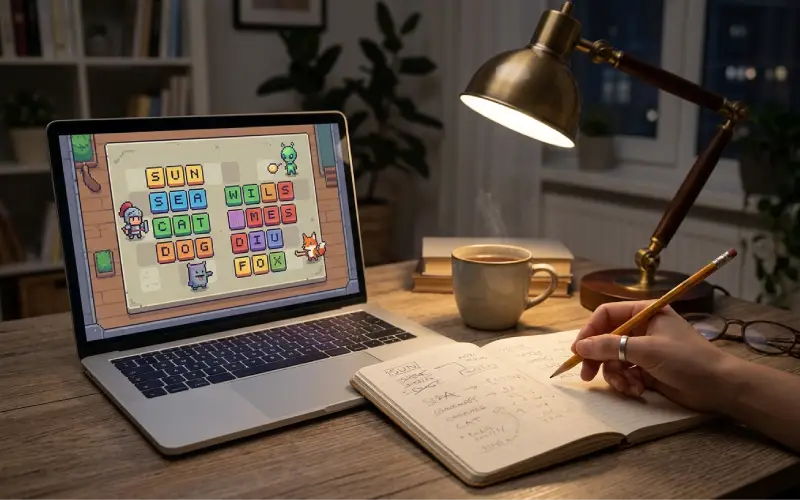
The Room series begins with a single ornate box on a table. Your job is to open it. You rotate it, zoom in, press tiny latches and follow clues from one mechanism to the next, like a piece of antique machinery.
This one asks more of you. It gives fewer instructions, the puzzles take longer, and it expects you to look carefully before you touch anything. That is why it comes fifth instead of first. Even so, the interface feels so physical that you rarely feel rule-stuck. You can always see what turns. In addition, a hint system nudges you without handing over the answer.
Touch screens suit it, so I would start with the mobile version. Think of it as the natural step up after the easiest puzzle games for beginners. If you finish and want more, the sequels raise the difficulty bit by bit.
6. Baba Is You: the graduation game
I include Baba Is You with a warning label. It is a brilliant game, and it is also a hard one. In every level, the game writes its rules as words on the floor, such as “Baba is you” or “wall is stop.” You push those words around to change the rules. Break the sentence, and you change reality.
Why put it on a list of puzzle games for beginners? First, the early areas teach well. Second, it is one of the few hard puzzle games that lets you walk away. The levels sit on a map, so the game never forces you through them in a line. Skipping a level that has beaten you is a normal way to play.
Still, treat this as the game you return to after the other five. By then you have a feel for idea-stuck. The later levels rank among the most demanding in the genre, and beginners who expect a straight climb tend to quit around the middle. In short, the difficulty curve is a mountain with side paths, not a staircase. Use the side paths.
Habits that make puzzle games for beginners easier
The ten-minute rule. This one is mine. If ten minutes pass without a single new idea, stop. Walk away, make tea and come back. Do not stop after one minute, and do not wait an hour. Ten minutes is long enough to try the obvious. It is also short enough that you have not started to resent the game.
Take hints in small bites. If a game has a hint system, use it for one step, not the whole solution. Then close it and carry on. A hint that solves half the puzzle leaves you with the dull half.
Name your stuck. When you feel frustrated, ask which of the three kinds it is. Rule-stuck means the game may not suit you yet, so replay the tutorial. Patience-stuck means you should check the controls or settings. Only idea-stuck deserves your effort.
Play shorter, more often. Forty minutes twice beats three hours once. Puzzles often solve themselves while you do something else.
Skip the famous hard games at first. The Witness and Return of the Obra Dinn are excellent, and I recommend both. However, they trust you to stay lost for a long time. Come back to them after a few wins.
Puzzle games for beginners: frequently asked questions
Unpacking or Monument Valley. Neither has a fail state, both are short, and the rules are clear from the first minute.
They make you better at puzzle games, and the enjoyment is a fine reason to play. The evidence that they raise general intelligence is much weaker than advertising suggests, so treat them as fun and as practice in patience rather than as a mental gym.
No. Most of the games here run on observation and curiosity. Baba Is You is the closest to a logic puzzle, and even it is taught through play, not study.
No. It is your game. A hint that unsticks one step usually leaves most of the satisfaction intact, while reading a full walkthrough often leaves very little. Decide before you start how much help you want.
Monument Valley and The Room were both designed around touch controls, and they feel at home on a small screen.
Two to five hours is a good size. Long enough to feel real, short enough that you actually finish. Finishing builds the confidence you need for the next one.
That is normal. Work out which kind of stuck it is, take a break, or switch to a gentler game. Quitting one puzzle game does not mean the genre is not for you.
The best puzzle games for beginners are the ones that fit your mood, not the ones with the best reputation
Start with the game that fits your mood, not the one with the best reputation. Unpacking if you want calm, Monument Valley if you want beauty, Portal if you want to be taught well.