

 10 min read
 Updated on October 5, 2026
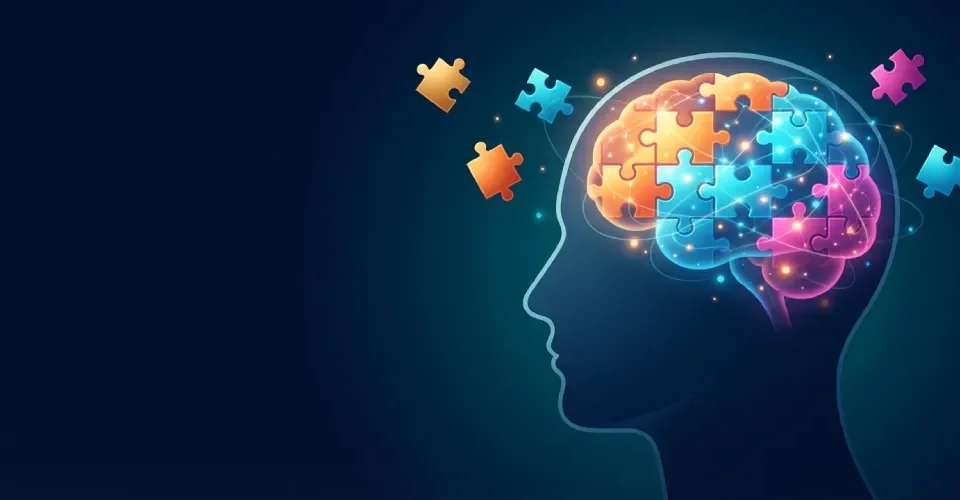
What do puzzles do to the brain? It is a fair question, because puzzles are often described as “brain exercise” without much explanation. The honest answer is that puzzles ask your brain to pay attention, hold information in mind, search for patterns, and reward you when you get something right. Each of these actions involves different brain systems working together. Researchers are still learning how much long-term benefit this brings, so we will separate what is well supported from what is still uncertain.
In this guide, we look at ten things that happen in your mind while you puzzle, what science suggests about them, and how to get the most from your puzzle time. This is a general-interest article, not medical advice.
1. Puzzles Switch On Several Brain Areas at Once
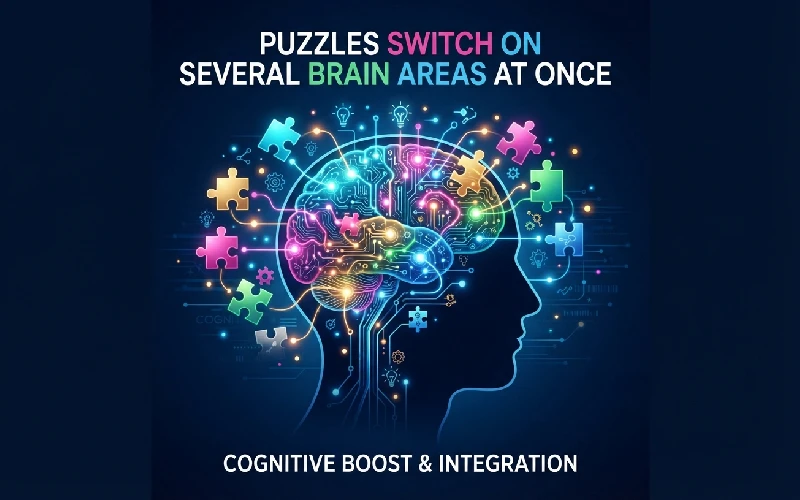
A puzzle is rarely a single skill. A jigsaw uses visual processing and spatial reasoning. A crossword uses language and long-term memory. Sudoku uses logic and working memory. Because puzzles combine skills, many brain regions work together, including the visual areas at the back of the brain and the frontal areas used for planning and decision-making.
So what do puzzles do to the brain in the simplest sense? They keep it busy in an organised way. Brain scans taken while people solve problems show activity across many connected regions, not in one “puzzle spot.” Different puzzle types call on different mixes of regions, which is one reason variety is useful.
2. They Train Your Working Memory
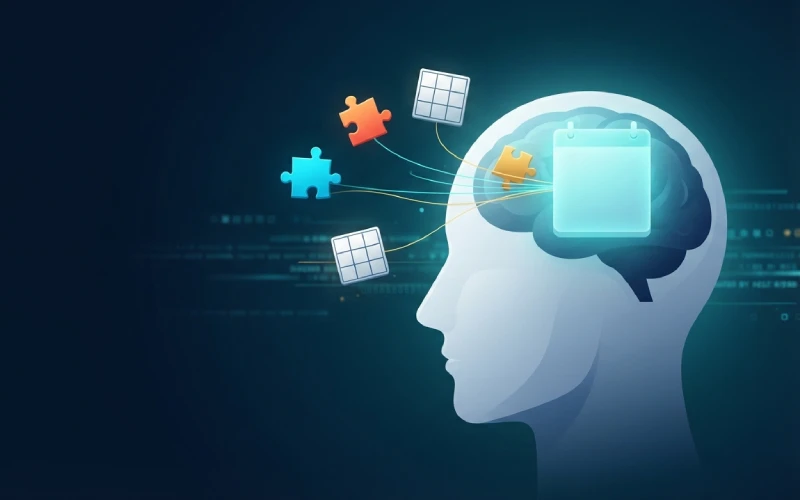
Working memory is the mental notepad you use to hold a few pieces of information for a short time. When you solve a Sudoku, you remember which numbers are possible in a square while you check the row and column. When you do a jigsaw, you remember the shape you are looking for while scanning dozens of pieces.
Using this notepad repeatedly is a form of practice. Research on brain training shows that people usually improve at the tasks they practise. Whether that improvement carries over to everyday memory is less clear, and scientists still debate it. The sensible conclusion is that puzzles make you better at puzzling and may offer some wider benefit, but nobody can promise it.
3. They Strengthen Attention and Concentration
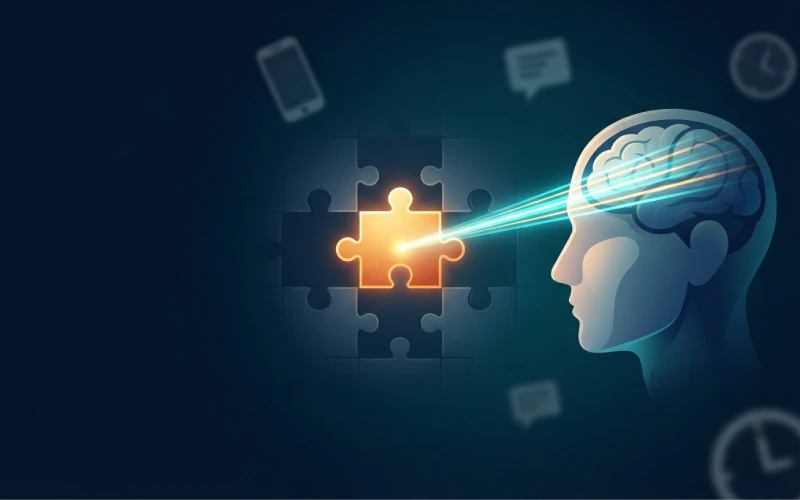
To finish a puzzle, you must ignore distractions and keep your mind on one task. This uses the brain’s attention systems, especially in the frontal lobes. Each time you resist the urge to check your phone and return to the grid, you practise sustained attention.
Like a muscle, attention seems to respond to regular use. Many people notice that after a few weeks of daily puzzling, it is easier to stay with a task. This is mostly based on personal reports and small studies, so treat it as encouraging rather than proven. If you want to try it, start with ten to twenty minutes and increase gradually.
4. They Trigger the Reward System
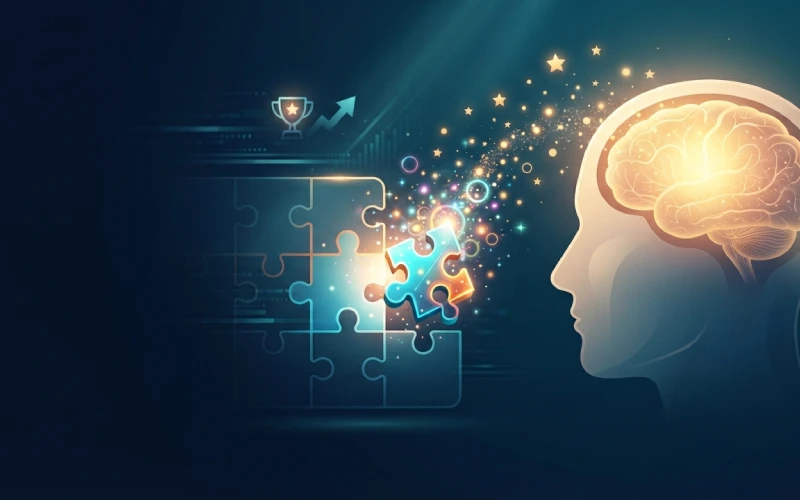
Solving a clue, fitting a piece, or finding the last number feels good. That feeling is linked to the brain’s reward system, which includes a chemical messenger called dopamine. Dopamine is involved in motivation and in the urge to keep going after something rewarding.
This is why puzzles can be so hard to put down. Each small success gives a little lift, which encourages you to try the next one. It is also why finishing a tough puzzle feels more satisfying than finishing an easy one. Scientists describe dopamine as part of how we learn what is worth repeating, not simply as a “pleasure chemical,” so it is more accurate to say puzzles tap into your motivation system.
5. They Produce “Aha!” Moments
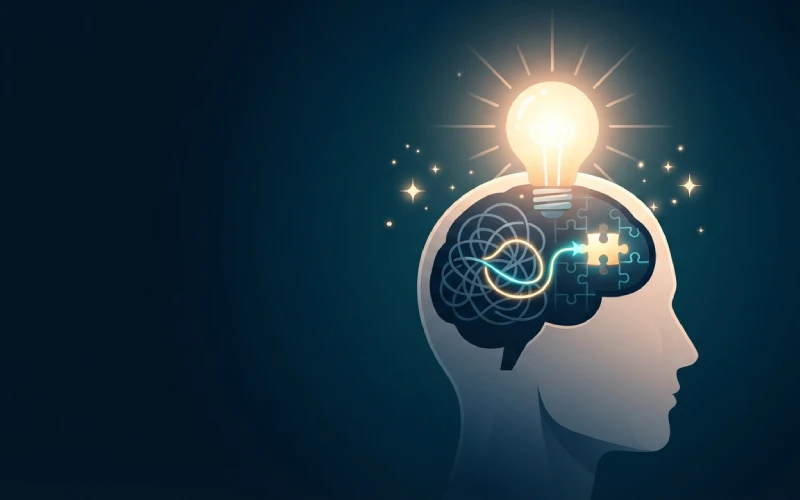
Sometimes you stare at a clue for ten minutes, and then the answer suddenly appears. Researchers call this an insight, or an “aha!” moment. Studies of insight have found brief bursts of activity in certain brain regions just before people report a sudden solution, often in areas on the right side of the brain linked to making distant connections.
Insight happens when your mind restructures a problem and sees it in a new way. This is why walking away from a stuck puzzle often helps. Your brain keeps working in the background, and a fresh look may reveal the answer. Experiencing this regularly teaches you that being stuck is temporary, which is a useful mindset in daily life too.
6. They Encourage Flow and Calm
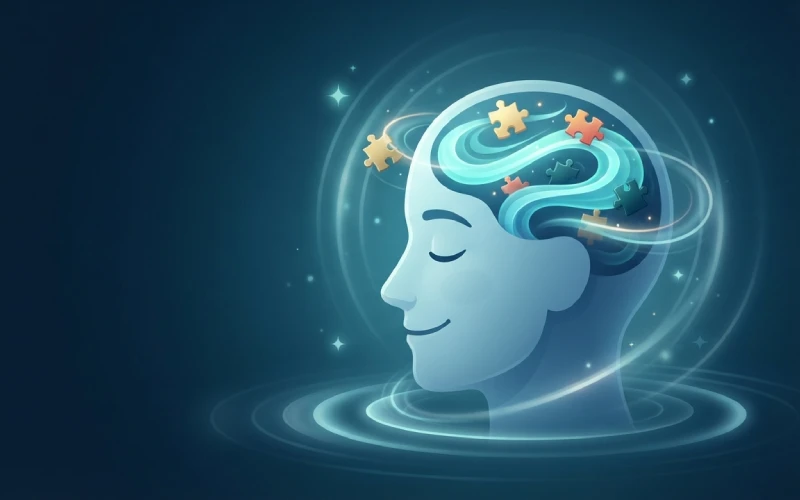
Many puzzlers describe a state where time passes quickly and worries fade. Psychologists call this “flow,” a state of deep absorption that appears when a task is challenging enough to hold your interest but not so hard that it overwhelms you.
While in flow, your attention is focused on one thing, so your mind has less room for rumination. This is one reason puzzles feel relaxing. They are not a treatment for anxiety or depression, and anyone struggling with those should seek professional support. But as a way to give your mind a rest from constant worry, puzzles are popular for good reason.
7. They May Support Neuroplasticity
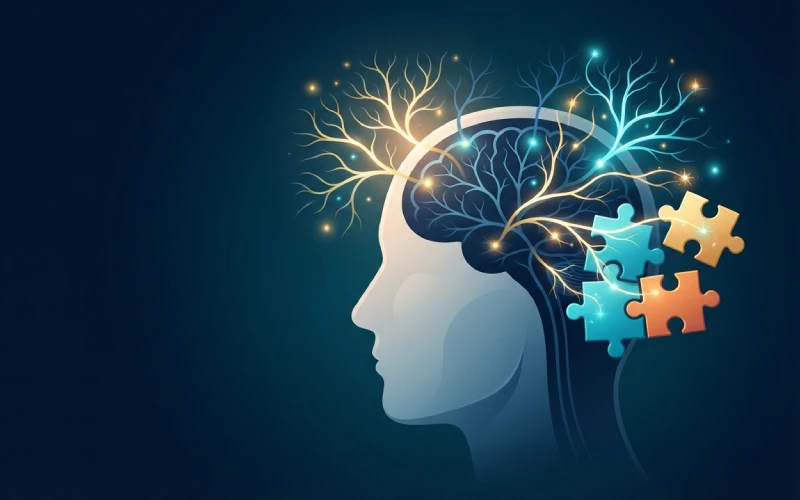
Neuroplasticity is the brain’s ability to change its connections in response to experience. Learning a new skill, such as a new type of puzzle, creates new patterns of activity, and repeated practice can strengthen them. This is how you become faster at spotting patterns in Sudoku or recognising edge pieces in a jigsaw.
Plasticity continues throughout adult life, although it is often strongest when you learn something new and challenging. This suggests a practical tip: if you always do the same puzzle at the same level, your brain may get comfortable. Occasionally trying a new type or harder level may give your brain more to learn.
8. They Build Pattern Recognition and Visual-Spatial Skill
Puzzles train you to notice patterns, whether it is a repeating number structure, a colour gradient, or a familiar shape. The brain is very good at pattern recognition, and practice makes it faster and more accurate within that task.
Jigsaws and similar puzzles also exercise visual-spatial reasoning, the ability to picture shapes and how they fit together. This is the same ability used when reading maps or arranging furniture. Small studies have linked puzzle activity with better spatial skills, although they cannot show that puzzles are the only cause. People with strong spatial skills may also simply enjoy puzzles more.
9. They May Contribute to Cognitive Reserve
Cognitive reserve is the idea that a mentally active life helps the brain cope with age-related changes for longer. Education, interesting work, social contact, and hobbies are all thought to contribute. Puzzles may be one small piece of that picture.
Some observational studies have found that adults who do puzzles more often perform better on thinking tests. However, these studies show a link, not a cause. People who stay mentally active may also exercise more, sleep better, or have other healthy habits. Puzzles are a pleasant part of a brain-healthy lifestyle, but they cannot guarantee protection against memory loss or dementia. If you have concerns about your memory, speak with a doctor.
10. They Work Best Alongside Other Healthy Habits
The brain is influenced by the whole body. Regular exercise, good sleep, a balanced diet, and social connection all have strong evidence for supporting brain health. Puzzles fit well into this mix, but they should not replace it.
A simple weekly routine might include a few puzzle sessions, regular walks, enough sleep, and time with friends or family. Doing puzzles together with other people adds a social benefit, which research consistently links to better wellbeing.
What Puzzles Probably Do Not Do
It is just as important to be clear about the limits.
- They do not make you “smarter” in general. Practice improves the skills you practise. Broader effects are possible but not proven.
- They do not prevent dementia. Research is ongoing, but no puzzle can guarantee protection.
- They are not a treatment. Puzzles should not replace medical care, therapy, or medication.
- More is not always better. Hours of puzzling at the expense of sleep, movement, or relationships is not a healthy trade.
Being honest about these limits makes the real benefits easier to appreciate. Puzzles are a low-cost, enjoyable way to give your mind a workout.
Which Puzzles Are Best for Your Brain?
Different puzzles exercise different skills, so a mix is ideal.
- Sudoku and logic grids: Logic, working memory, and concentration.
- Crosswords and word games: Vocabulary, long-term memory, and flexible thinking.
- Jigsaw puzzles: Visual-spatial skills, patience, and relaxation. See our guide to jigsaw puzzle benefits (link this to your jigsaw post).
- Logic puzzle video games: Planning and deduction. Try our list of tough logic puzzle games (link this to your first post).
- Riddles and paradoxes: Lateral thinking. Our post on the hardest logic puzzles (link this to your second post) is a good place to start.
How to Get the Most from Puzzles
- Challenge yourself a little. Choose puzzles that make you think but that you can still finish.
- Vary the type. Rotate between word, number, and visual puzzles.
- Take breaks. If you are stuck, rest and return later, because insight often arrives after a pause.
- Keep sessions regular. Short daily sessions are easier to maintain than occasional marathons.
- Protect your eyes. Use good lighting and rest your eyes, especially with small print or screens.
- Make it social. Share a puzzle with family or friends for extra enjoyment.
They engage attention, working memory, pattern recognition, and the reward system. With regular practice, you usually get better at the skills involved, and puzzles can be a relaxing, mentally active habit.
They improve the skills you practise. Evidence that they raise general intelligence is limited, so it is best to treat them as a healthy hobby, not an IQ booster.
Solving problems is linked to the brain’s reward system, which involves dopamine. This is part of why success in a puzzle feels satisfying and motivating.
No puzzle can promise that. Some studies link puzzling with better thinking skills, but the evidence shows association, not proof. Exercise, sleep, diet, and social contact matter too.
There is no fixed rule. Fifteen to thirty minutes a day suits many people. Stop if you feel tired or your eyes feel strained.
Both provide mental stimulation. Paper puzzles give your eyes a break from screens, while apps are convenient and adjust the difficulty.
The full and final thought
So, what do puzzles do to the brain? They keep your attention, memory, and reasoning active, reward you for effort, and give your mind a calm place to focus. The long-term effects are still being studied, which is why it is wise to enjoy puzzles as one healthy habit among many, not as a cure for anything.
Pick a puzzle that interests you, give it fifteen minutes today, and notice how your mind responds. Which puzzle do you think challenges your brain the most? Tell me in the comments!