

 9 min read
 Updated on October 2, 2026
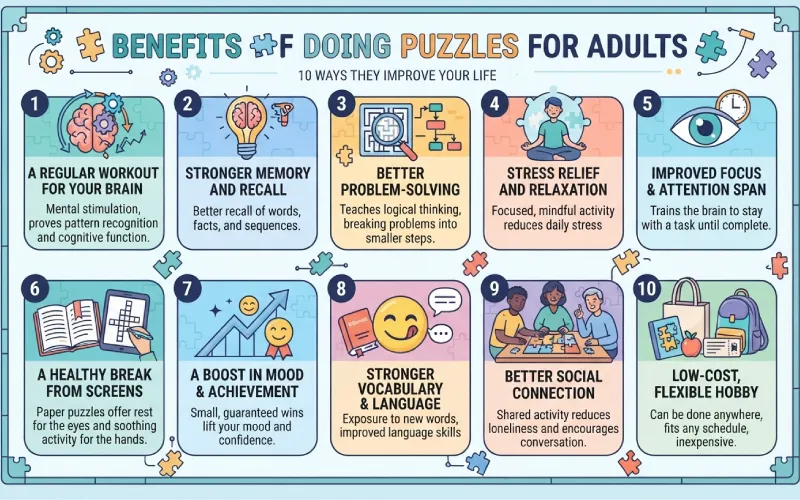
Benefits of Doing Puzzles for Adults: 10 Ways They Improve Your Life
Many people think puzzles are only for children or retirees, but the benefits of doing puzzles for adults are much wider than most expect. A crossword over morning coffee, a Sudoku on the commute, or a logic game before bed can sharpen your thinking, calm your mind, and give you a small win in a busy day. Puzzles are also cheap, easy to start, and available in many forms, from paper books to phone apps.
In this guide, we look at ten real benefits, the best puzzle types for grown-ups, and simple tips for building the habit. We have kept the health claims honest, because research on puzzles is promising but still growing.
1. A Regular Workout for Your Brain
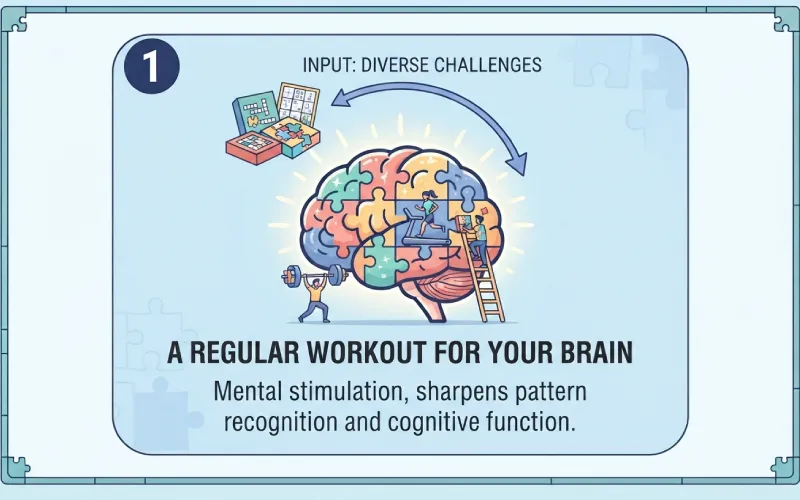
The most talked-about benefit of doing puzzles for adults is mental stimulation. Puzzles ask you to pay attention, hold information in mind, and look for patterns. That mix of skills is similar to the way people exercise different muscles at the gym. Some observational studies have linked regular puzzling with better performance on thinking tasks in older adults. However, this kind of research shows an association, not proof that puzzles cause the improvement. Think of puzzles as one enjoyable part of a brain-friendly lifestyle that also includes sleep, exercise, and social contact.
2. Stronger Memory and Recall
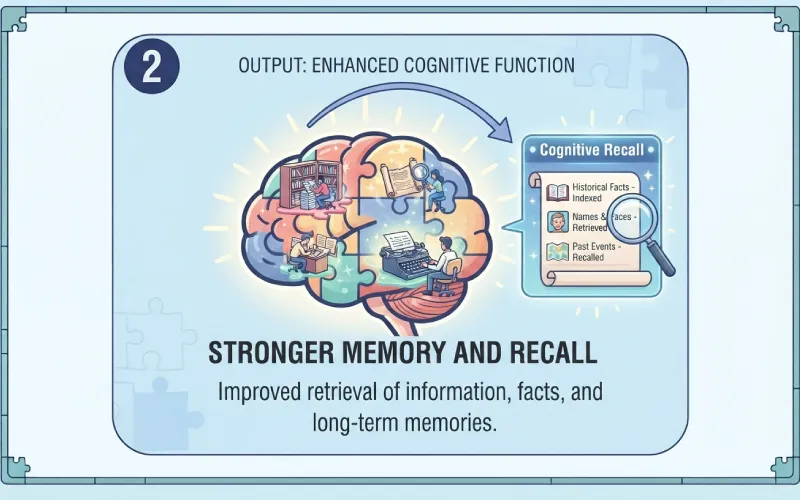
Most puzzles quietly train your memory. In a crossword, you pull words and facts from long-term memory. In Sudoku, you keep track of which numbers you have already tried in each row. In a jigsaw, you remember the colours and shapes of pieces you saw earlier. Using memory in this active way is a good habit, much like walking keeps your legs in practice. No puzzle can promise to prevent memory loss, and anyone worried about their memory should see a doctor. Still, keeping your recall busy with enjoyable challenges is a sensible choice.
3. Better Problem-Solving and Logical Thinking
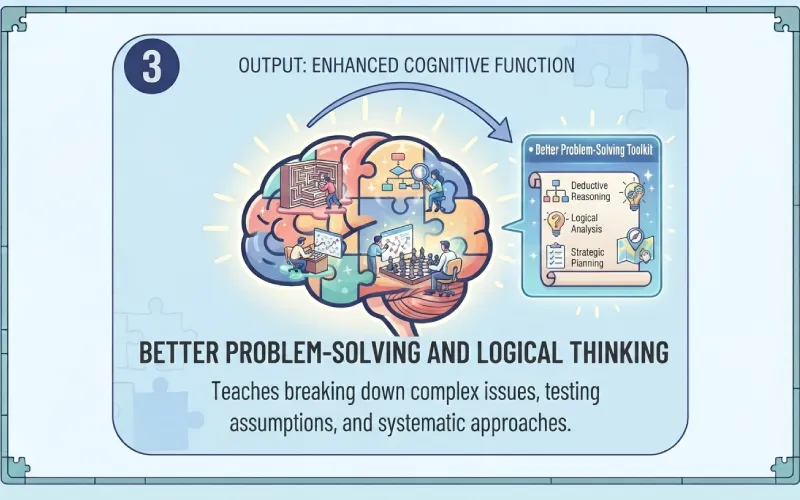
Puzzles teach you to break a big problem into smaller steps. You make a guess, test it, notice when it fails, and try another route. This cycle of testing and adjusting is the core of logical thinking, and it is useful in work, money decisions, and daily planning. Logic grids, Sudoku, and deduction games are especially good for this. If you want to try something harder, take a look at our list of tough logic puzzle games (link this to your first post). Over time, you may notice that you approach everyday problems with a calmer, more organised mind.
4. Stress Relief and Relaxation
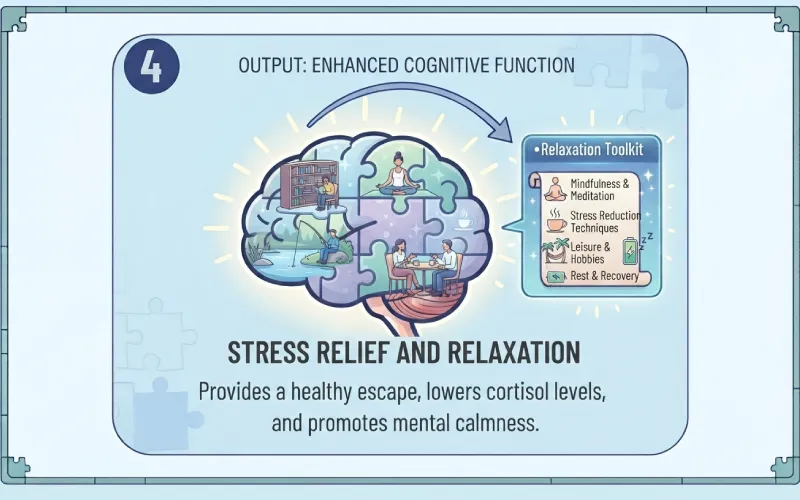
Working on a puzzle pulls your attention onto one small, manageable task. For a while, you stop replaying worries about work or bills. That calm focus is why many adults use puzzles as a quiet reset after a long day. There is no deadline, no boss, and no score unless you want one. A puzzle will not treat anxiety or depression, and it should not replace professional help. But as a simple way to wind down, it works well for many people, and it costs far less than most hobbies.
5. Improved Focus and Attention Span
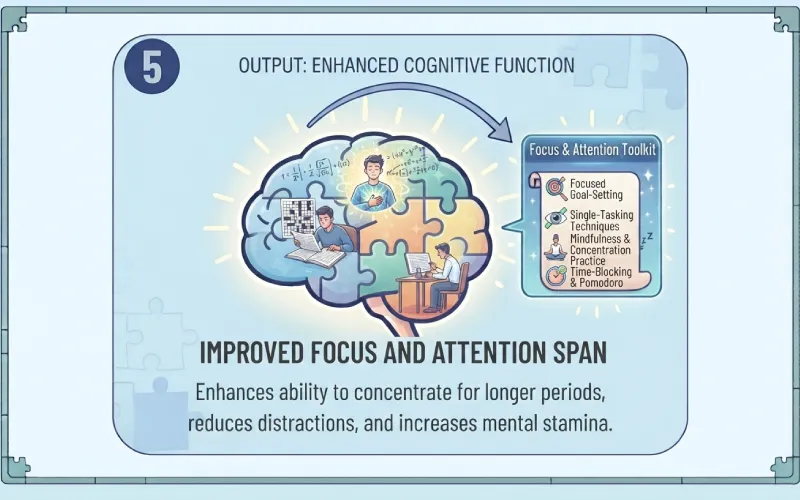
Adults today are interrupted by notifications dozens of times a day. A puzzle trains the opposite habit: staying with one task until it is done. Start with fifteen or twenty minutes of uninterrupted puzzling and notice how your attention behaves. At first you may feel the urge to check your phone, and that is normal. With regular practice, many people find it easier to concentrate for longer periods, both during puzzles and at work. Treat it as practice, not a test.
6. A Healthy Break from Screens (Even with Digital Puzzles)
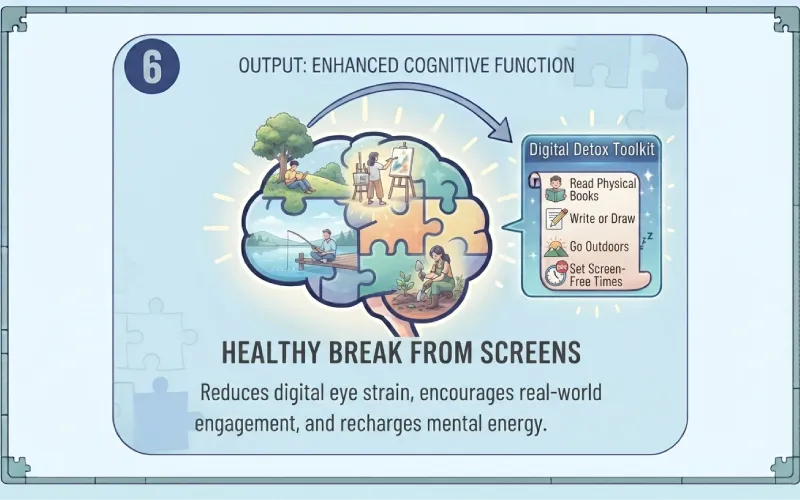
Paper puzzles such as crosswords, word searches, and jigsaws give your eyes a break from glowing screens. They also give your hands something to do, which many people find soothing. If you prefer apps, you can still get value from them, but try to set a time limit and avoid late-night scrolling between puzzles. A good routine is to use paper puzzles in the evening and digital ones during short breaks in the day. Either way, the goal is to replace mindless scrolling with something active.
7. A Boost in Mood and Sense of Achievement
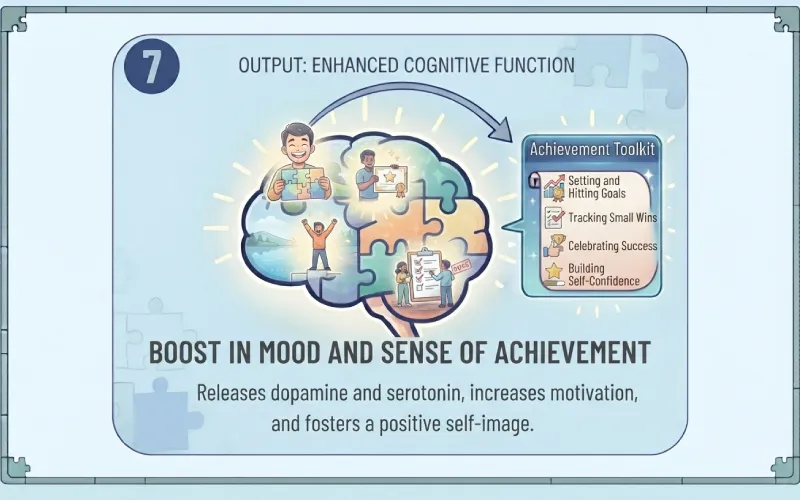
Finishing a puzzle gives you a clear, visible result. You can point at a completed grid or picture and say, “I did that.” Each correct answer along the way brings a small sense of progress, which can lift your mood, especially on days when bigger goals feel distant. This is one reason puzzles are popular with busy adults: they offer a small, guaranteed win in a short amount of time. Keep a simple list of puzzles you have finished, and you will build a satisfying record of effort.
8. Stronger Vocabulary and Language Skills
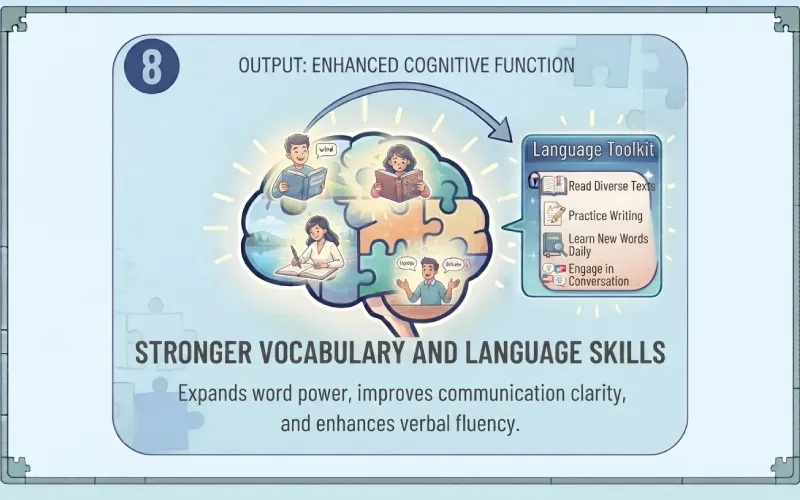
Crosswords, word searches, anagrams, and word games expose you to new words and encourage you to recall old ones. Solving cryptic clues also teaches you to look at language in more than one way. Adults who learn a second language often use word puzzles to practise spelling and meaning in a relaxed way. Even if you never learn a new language, a richer vocabulary can make your writing and speaking more confident. If you meet a word you do not know, look it up, because that is where the learning happens.
9. Better Social Connection
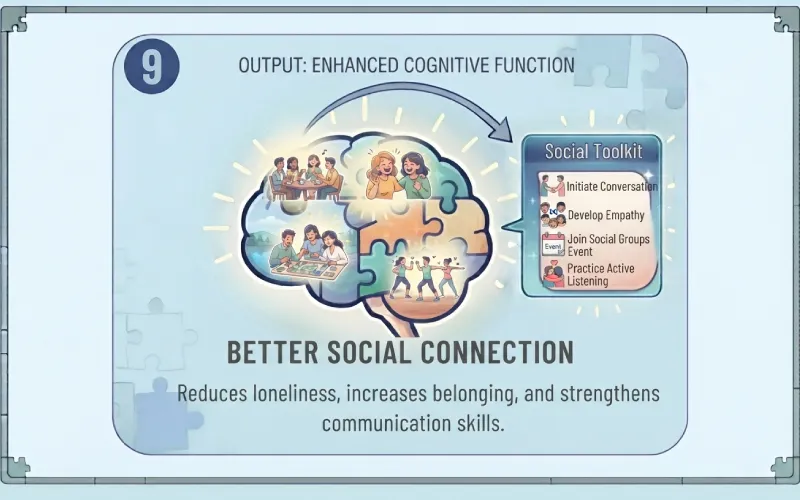
Puzzles are surprisingly social. Families do jigsaws together, coworkers share crossword clues at lunch, and friends compete over Sudoku times or trivia. Puzzle clubs, library groups, and online communities make it easy to meet people with the same interest. For older adults especially, shared activities can reduce loneliness and provide regular conversation. Even a quick message such as “Can you help me with 14 across?” can start a friendly chat. Among all the benefits of doing puzzles for adults, the social side is often the one people appreciate most.
10. A Low-Cost, Flexible Hobby for Any Lifestyle
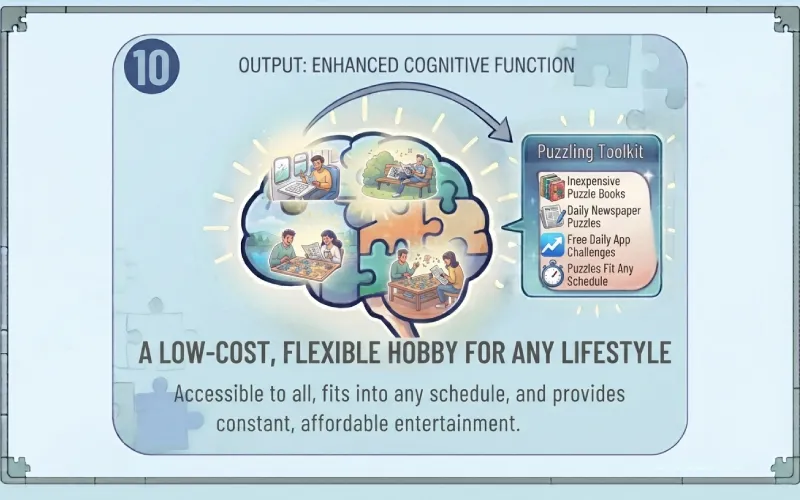
You can puzzle almost anywhere: at home, on a train, in a waiting room, or on a lunch break. A puzzle book costs a few dollars, many newspapers print free puzzles, and countless apps offer free daily challenges. You can pick a puzzle up for five minutes or spend a whole weekend on a large one. This flexibility makes puzzles suitable for shift workers, parents, students, and retirees alike. Few hobbies are so easy to start and so simple to fit around real life.
Best Types of Puzzles for Adults
Different puzzles exercise different skills, so it helps to try a few and see which you enjoy most.
- Sudoku: Great for logic, concentration, and patience. Start with easy grids and move up gradually.
- Crosswords: Good for vocabulary, general knowledge, and memory. Cryptic crosswords add an extra layer of wordplay.
- Jigsaw puzzles: Relaxing and good for visual-spatial skills. They also work well as a shared activity.
- Logic grid puzzles: Excellent for deduction. You use clues to work out who did what, with careful elimination.
- Word searches and anagrams: Easy to start, light, and perfect for short breaks.
- Brain-teaser and riddle books: Fun for lateral thinking and group play.
- Puzzle video games: Games such as those in our list of the hardest logic puzzles (link this to your second post) offer a deeper challenge for experienced players.
How to Build a Puzzle Habit as an Adult
The hardest part of any new habit is getting started. These simple tips make it easier.
- Start small. Ten to twenty minutes a day is enough. You can always do more if you enjoy it.
- Pick a regular time. Morning coffee, a lunch break, or the hour before bed all work well. Linking puzzles to an existing routine helps the habit stick.
- Choose the right difficulty. If a puzzle is too easy, you get bored. If it is too hard, you get frustrated. Aim for something that makes you think but is still solvable.
- Mix it up. Rotate between word, number, and visual puzzles so that you exercise different skills.
- Keep it fun. If a puzzle starts to feel like homework, put it down and try another kind.
- Do it with others. Share a crossword with a partner or join an online puzzle group for extra motivation.
- Rest your eyes. Use good lighting and take short breaks, especially with small print or screens.
Are There Any Downsides?
Puzzles are safe for almost everyone, but a few sensible points are worth remembering. Do not expect puzzles to protect you from every health problem, because no single activity can do that. Do not let puzzle time replace sleep, exercise, or time with people. And if a puzzle makes you feel anxious or frustrated, it is fine to stop. The point is enjoyment, not pressure. If you have concerns about memory, mood, or concentration, talk to a doctor rather than relying on puzzles alone.
They provide mental stimulation, help with focus and memory, offer stress relief, and create a sense of achievement. They can also be a fun way to connect with other people.
Some studies link regular puzzling with better thinking skills in older adults, but the research is observational. Puzzles are a healthy habit, not a guaranteed protection.
There is no fixed rule. Many people enjoy fifteen to thirty minutes a day, or a longer session a few times a week. Choose a rhythm that feels comfortable.
It depends on your goals. Crosswords suit vocabulary and general knowledge, Sudoku suits logic, and jigsaws suit relaxation and visual skills. Trying several types is the best approach.
Both can offer mental stimulation. Paper puzzles give your eyes a break from screens, while apps are convenient and often adjust the difficulty for you.
Many adults find the focused, repetitive nature of puzzling calming. They can be a helpful part of a relaxation routine, but they are not a treatment for anxiety or depression.