

 10 min read
 Updated on October 5, 2026
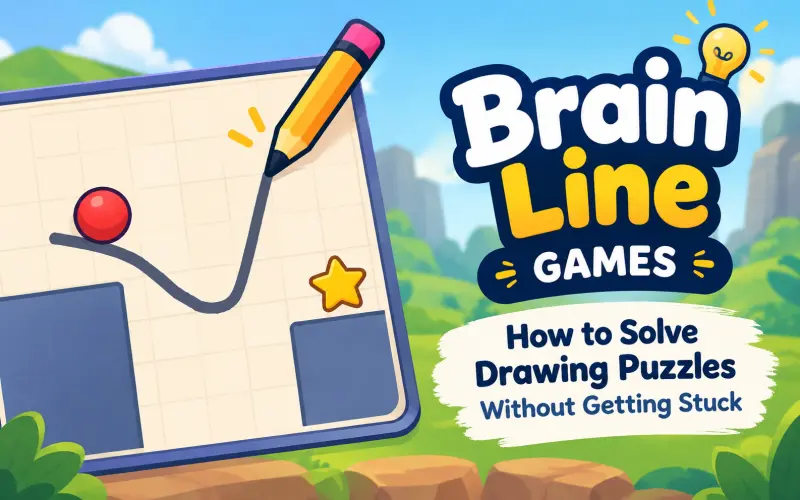
Drawing-based puzzle games look simple at first but they are not as simple as we think it is. There is a ball, a target, some obstacles, and a pencil or drawing tool, and you need to draw something to get the ball to the target. Your job is to create a line or shape that helps the ball reach its destination.
But once the levels become more challenging, simply drawing a line is not enough.you have to consider gravity, motion, equilibrium, timing, obstacles, and the form of your drawing. If you are just getting started on learning how to solve drawing puzzles without getting stuck, remember that your line is not just a path; your drawing is the puzzle itself.
In this guide, we will examine some strategies that you can apply to Brain Line-style games in a deliberate manner so that you can complete harder levels with fewer attempts.
What Are Brain Line Games?
Brain Line games are sketch-based puzzle games in which what you draw on the screen determines what happens: rather than moving a character around a platform, you typically draw a line, a platform, a barrier, or another shape to move an object.
For instance, a level may provide:
- A red ball
- A target or star
- Platforms or obstacles
- Empty space between objects
- A drawing tool
Your objective is to create something that guides the ball toward the target.
The interesting part is that there may not be one single solution. A simple line might work, while a completely different shape could also solve the same level.
That makes these games more about problem-solving and experimentation than simply following a predetermined path.
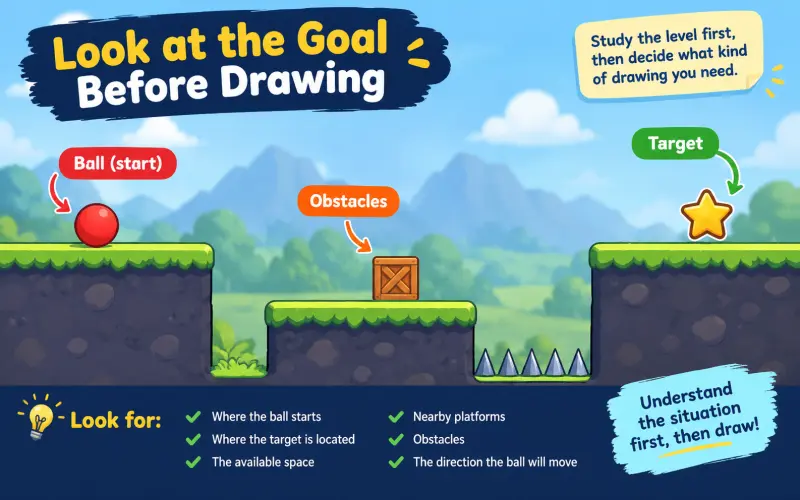
Look at the Goal Before Drawing
The biggest mistakes players make is starting to draw immediately without knowing the actual objective.
Before making your first line, take a few seconds to study the entire level.
Look at:
- Where the ball starts
- Where the target is located
- The available space
- Nearby platforms
- Walls and obstacles
- The direction the ball is likely to move
- Areas where your drawing can provide support
Ask yourself:
“What needs to happen for the ball to reach the goal?”
This simple question can prevent many unnecessary attempts.
Instead of drawing first and thinking later, understand the situation first and then decide what kind of drawing is required.
Think About Gravity and Movement
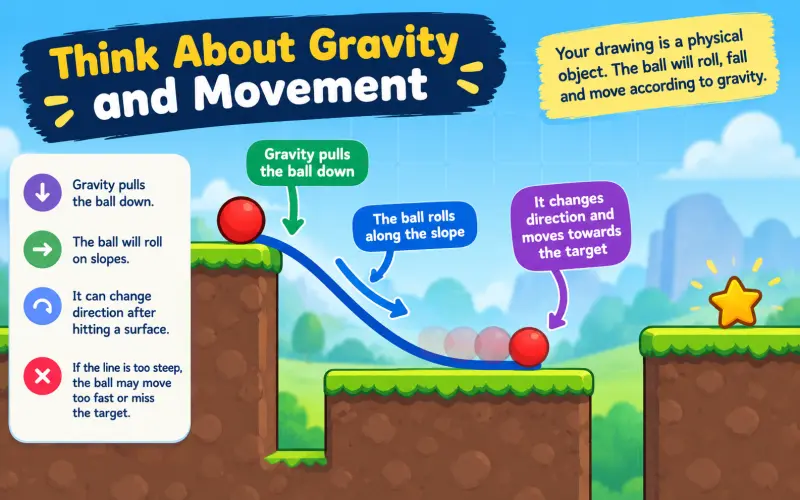
Gravity is often one of the most important elements in drawing puzzle games you can take example from brain line.
If the ball falls downward, you need to consider what will happen after it touches your drawing.
For example, imagine a ball starting on the left side while the target is on the right. Drawing a completely flat line might not help if there is no way for the ball to move toward the target.
A curved line, slope, or angled platform could change the ball’s direction.
Think about your drawing as a physical object.
Ask:
- Where will the ball land?
- Will it roll?
- Will it bounce?
- Will the line support the ball?
- Will the ball slide in the wrong direction?
- Could the drawing itself fall or move?
Understanding movement before drawing is one of the most useful skills for how to solve drawing puzzles without getting stuck.
Plan Your Line Before You Draw
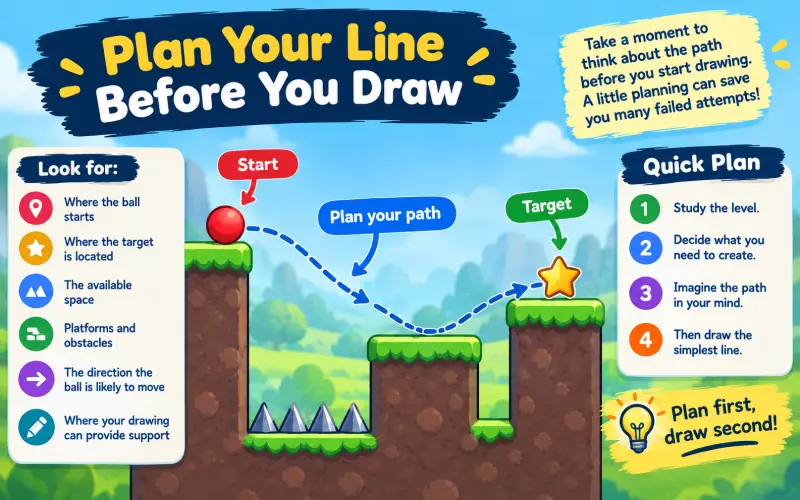
Don’t always try to draw a complicated line; in fact, a simple line is often easier to control than a large shape with many curves. Before drawing, imagine the path from the starting position to the target.
For example:
Ball → landing point → slope → target
If you can mentally visualize those steps, you are much more likely to get a solution.
Identify the most important point in the level. Sometimes you don’t need to connect the ball directly to the target. You only need to create the right platform or obstacle so that the game’s physics does the rest.
Keep Your Drawings Simple
When a level becomes difficult, players often respond by drawing more.
They create large circles, complicated shapes, multiple platforms, or long lines across the screen.
This can actually make the puzzle harder.
A complicated drawing may:
- Block the ball
- Change its direction unexpectedly
- Create an unwanted landing point
- Waste available space
- Make the physics unpredictable
Start with the smallest drawing that could solve the problem.
If it doesn’t work, change one part of the design and try again.
This makes experimentation much easier because you know which change affected the result.
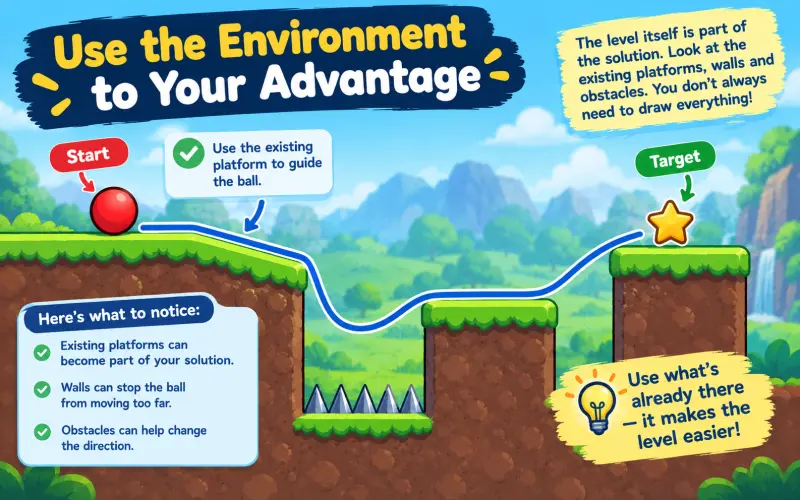
Use the Environment to Your Advantage
The level itself is part of the solution. Don’t assume that you have to create everything with your drawing.
Existing platforms and walls can help control movement. A wall might stop the ball from moving too far, while an existing platform could provide the first landing point.
Before drawing, identify the objects already available in the level.
For example:
Instead of drawing a complete path from the ball to the target, you might only need to draw a small platform that redirects the ball toward an existing surface.
Using the environment reduces the amount of drawing you need and can make difficult levels much easier.
You can take example from this picture shown below:
Think About Where the Ball Will Land
A common mistake is focusing only on where the line starts.
The landing point is often more important.
Imagine dropping a ball onto a sloped line. It won’t simply stop where it touches the line. It may roll along the slope.
Therefore, when creating a platform, consider:
Where will the ball touch it?
and then:
Where will it go after touching it?
This creates a chain of movement.
A useful way to think about it:
Starting point → first contact → movement → second contact → target
If one of these steps sends the ball in the wrong direction, modify your drawing.
Don’t Draw Too Close to the Ball
Sometimes placing your line directly beneath or beside the ball can create an unexpected result.
The ball may:
- Move before the drawing is finished
- Hit the line at the wrong angle
- Become trapped
- Roll away from the target
Leave enough space to control the ball’s movement.
When possible, create a drawing that gives the ball a clear and predictable route.
Use Slopes Instead of Straight Lines
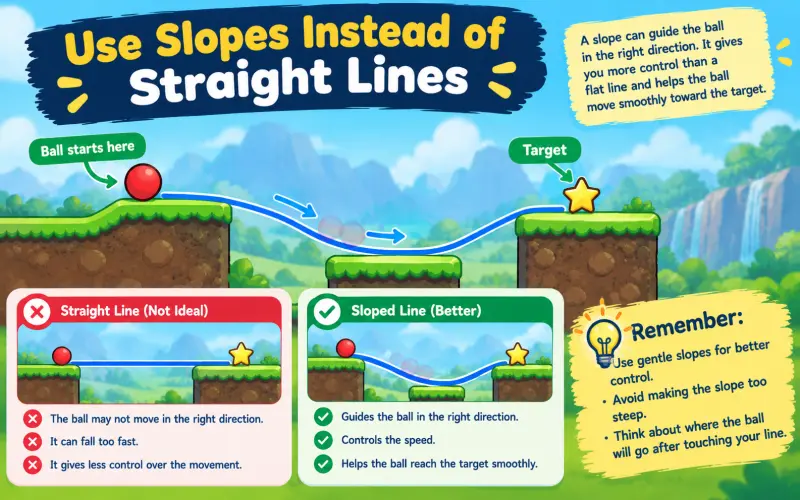
Straight lines are useful sometimes, but slopes can give you much more control over the ball’s movement then the straight line. For example, a slight angle can make the ball roll in a particular direction instead of simply moving straight ahead.
If your target is positioned lower and to the right, a downward-right slope may help guide the ball toward it. However, avoid making the slope too steep unless the level requires it, because the ball may move too quickly and miss the target.
Instead, try to create a gentle slope that gives the ball enough momentum while keeping its movement predictable. This way, you can guide the ball toward the target without losing control.
Eventually, the goal is not simply to make the ball move. Instead, you want it to move in the correct direction at a manageable speed.
Think in Small Steps
When you see a difficult level, don’t try to solve the entire puzzle in your head at once.
Break it into smaller problems.
Step 1
Where does the ball start?
Step 2
What is the first obstacle?
Step 3
Where should the ball go after passing it?
Step 4
What drawing can create that movement?
Step 5
Where should the ball eventually reach the target?
This approach makes complicated levels feel much more manageable.
Instead of asking:
“How do I solve this whole level?”
ask:
“What is the first thing I need to make happen?”
Experiment Without Repeating the Same Mistake
Failure is a normal part of drawing puzzle games.
The important thing is to learn from each failed attempt.
If your ball falls to the left, don’t simply redraw the exact same line.
Change something.
You could:
- Change the angle
- Move the starting point
- Make the line shorter
- Make the platform wider
- Create a different landing position
- Remove an unnecessary part of the drawing
Each attempt should teach you something about the level’s physics.
This turns failed attempts into useful information.
What to Do When You Get Stuck
Eventually, you will reach a level where your first few ideas don’t work.
Don’t immediately assume that the level requires a complicated solution.
Take a short break from drawing and look at the level again.
Try asking:
“What am I overlooking?”
Maybe there is an existing platform you haven’t considered.
Maybe the target can be reached from a different direction.
Maybe you’re trying to move the ball when you actually need to stop it.
Maybe your drawing is doing too much.
Changing your perspective can often reveal a solution.
Common Mistakes in Brain Line Games
1. Drawing Too Much
More lines don’t necessarily mean a better solution.
Start small.
2. Ignoring Gravity
Always consider what happens after the ball touches your drawing.
3. Focusing Only on the Target
The target tells you where the ball needs to finish, but you also need to understand how it will get there.
4. Making Lines Too Steep
A steep slope can send the ball away from the intended path.
5. Repeating the Same Solution
If an attempt fails, change something instead of repeating it exactly.
6. Ignoring Existing Objects
Platforms and obstacles can become useful parts of your solution.
7. Rushing
Take a moment to understand the level before drawing.
A Simple Strategy for Difficult Levels
When you don’t know what to do, use this basic method.
First, identify the starting position.
Second, locate the target.
Third, identify the biggest obstacle between them.
Fourth, decide where the ball should land first.
Fifth, draw the simplest possible platform or line that creates that movement.
Sixth, watch what happens.
Finally, adjust your drawing based on the result.
This approach gives you a repeatable method for how to solve drawing puzzles without getting stuck instead of relying completely on random experimentation.
Why Simple Solutions Often Work Better
Drawing puzzle games reward creative thinking, but creativity doesn’t always mean complexity.
A small line in the right position can sometimes solve a level that looks much harder than it actually is.
Simple solutions are useful because they are easier to predict.
You have fewer things to consider:
- Fewer contact points
- Fewer movement directions
- Less interference
- Less unpredictable physics
So before creating a complicated structure, ask yourself:
“Can I solve this with one simple line?”
If the answer is yes, start there.
Try Brain Line Games Yourself
Reading about drawing strategies is useful, but the best way to understand these puzzles is to play them yourself.
When you play, pay attention to how your drawings affect movement. Try different angles, shapes, and landing positions, and learn from each attempt.
If you’re looking for a casual puzzle experience, try a Brain Line game and put these strategies into practice. The more levels you play, the easier it becomes to recognize patterns and predict what your drawing will do.